We live in a small country. We have our unique perspective with regards to spatial dimensions. If you live in Ang Mo Kio and work in Shenton Way, you say your place of work is very far away from home. If you work in SGX Centre (in Shenton Way) you would only go to Lau Pa Sat for lunch because any other place further than that is too far. That is what we mean by far and near.
Now apply this perspective when travelling overseas, the likelihood is that you are going to get into trouble.
I had my first taste of perspective disorientation when I first visited China some 25 years ago. I was staying at the Shangri-La Hotel Beijing located at the Haidian district in Beijing. Over the weekend of my stay, I decided to visit the Beihai Park, 'near' the Forbidden City. I looked up the tourist map and decided to take a slow leisurely walk there as the route looked pretty straightforward. You go straight along Zhizhuyuan Road, then continue on Xizhimen Road and Pinganli Road; somewhat like walking from Orchard Hotel to Botanic Garden. I was right in one aspect. The journey did turn out to be a slow walk. After two hours, I was still on the road. For sure I did not lose my way except that the road just never seemed to end! I had to make a decision; to push on or turn back. I decided to push on because turning back meant that I had to walk another two hours and yet not reach the Beihai Park. Perseverance paid off. Eventually I reached the Beihai Park after almost 3 hours of walking. 25 years after that 'epic journey', I measured that distance between Shangri-La Hotel and Beihai Park on a scaled map; it is some 10 km as the crow flies.
After reaching Beihai Park, I was too tired to explore the park. I have little recollection of the park then except that I saw someone fell into the lake and I had a bottle of 'Micky' Cola. It was so delightful though it tasted like cough mixture. Today, we drink the real stuff; those days there were only imitations. (I have subsequently revisited Beihai Park two more times over the years.) Before you think that I must be darn stupid not to take a taxi, you must understand that during those days, Beijing was very different from what it is now. There were no taxis plying the road. As a matter of fact, there were very few cars on the road. Visitors did not use Renminbi but Foreign Exchange Certificate (FEC), something that a lot of Chinese today don't know what it was.
The moral of the story is; be careful with tourist maps especially if they are not drawn to scale. Find out the actual distance and don't made assumptions based purely on what we see. Remember that our perspective is distinctively Singaporean.
Saturday, 18 April 2015

Thursday, 16 April 2015
Travel tip #3 - How safe is the safe?
Some years back, during one of my trips, I kept my passport in the safe in the hotel room; something that I occasionally did during those days. On the last day, I checked out of the hotel, boarded a taxi and headed straight for the airport, all in a swift. Oh dear, after 10 minutes I realised that I didn't have my passport with me. It then dawned upon me that my passport was still in the hotel room's safe. I immediately turned back to the hotel to retrieve my passport. Fortunately, I discovered it early enough. Had I discovered it nearer the airport, I would have certainly missed my flight. The airport is some 45 minutes travelling time from the hotel.
From then onwards, I always make it a point to keep my passport in the pocket of my trousers. Sorry, I don't know what to advise ladies except that putting it in your handbag is not advisable. I also put my passport in a plastic bag first. This is particularly important if you are on a hiking trip. This proved to be the right thing to do during my Mt Fuji trek. It was raining on Mt Fuji and I was completely drenched at the end of the day.
With regards to hotel room safe, try not to put anything in it if you can avoid doing so. This brings to mind another encounter I had with hotel room safe. I had checked into this hotel room and was trying to use the safe. After fiddling with it for a while, I found that there is no way I could not lock it. So I called housekeeping. Shortly, the housekeeper came and she also could not lock it. Then she said, "Don't worry, I will change the safe for you." She then hauled up the safe and lugged it away with her two bare hands. Amazing, isn't! She did bring me another safe which she demonstrated to me could be locked safe and tight. But I was very sure I did not need it anymore. So, the next time you want to use the hotel room safe, make sure it is not one of those mobile ones.
From then onwards, I always make it a point to keep my passport in the pocket of my trousers. Sorry, I don't know what to advise ladies except that putting it in your handbag is not advisable. I also put my passport in a plastic bag first. This is particularly important if you are on a hiking trip. This proved to be the right thing to do during my Mt Fuji trek. It was raining on Mt Fuji and I was completely drenched at the end of the day.
With regards to hotel room safe, try not to put anything in it if you can avoid doing so. This brings to mind another encounter I had with hotel room safe. I had checked into this hotel room and was trying to use the safe. After fiddling with it for a while, I found that there is no way I could not lock it. So I called housekeeping. Shortly, the housekeeper came and she also could not lock it. Then she said, "Don't worry, I will change the safe for you." She then hauled up the safe and lugged it away with her two bare hands. Amazing, isn't! She did bring me another safe which she demonstrated to me could be locked safe and tight. But I was very sure I did not need it anymore. So, the next time you want to use the hotel room safe, make sure it is not one of those mobile ones.
Wednesday, 15 April 2015
Travel tip #2 - What is that round your waist?
I can never understanding why so many people like to put on a waist-pouch when they travel overseas. Aren't they telling all the crooks, "Hi, I am a tourist. All my valuables are in my waist-pouch here! Please help yourself to it.". Some time ago, there was a case of a Singaporean tourist who was kidnapped overseas and when the kidnapper was finally arrested, he confessed that he identified his prey as a foreigner because of the waist-pouch he was putting on. The point here is that when we are overseas, we should try to melt into the crowd and not stand out amongst the locals.
Talking about melting into the local crowd, a friend once told me that he was walking on the road in Guangzhou, China, with his friend when they noticed they were being stalked. As both of them are Cantonese speakers, they started talking to each other loudly in Cantonese and spicing up their conversation with typical Cantonese vulgarities. Their stalker left. Vulgar language does have its usefulness!
Let's come back to the waist-pouch. The waist-pouch tourist will tell you that he needs the waist-pouch because he needs to carry his wallet with all his cash and probably with a NTUC Passion card in it, his passport, his airticket, his hotel voucher, his sun glasses, his reading glasses, his Tiger Balm, his Axe brand medical oil, his sour plum (very useful in case he gets motion sickness), his tissue pack, a foldable umbrella, a bottle of mineral water and so many other things that he cannot leave home without. Oh, yes, not to forget something very important; toilet paper! Mr Waist-pouch heard that toilets overseas don't provide toilet paper. He is right on the spot for this.
Coming to passport. I realised that a lot of Singaporeans also bring their identity card along when they are overseas. Whatever for? A more useful thing to do is to make a couple of photocopies of your passport and keep it at separate locations. Please leave your identity card at home!
Talking about melting into the local crowd, a friend once told me that he was walking on the road in Guangzhou, China, with his friend when they noticed they were being stalked. As both of them are Cantonese speakers, they started talking to each other loudly in Cantonese and spicing up their conversation with typical Cantonese vulgarities. Their stalker left. Vulgar language does have its usefulness!
Let's come back to the waist-pouch. The waist-pouch tourist will tell you that he needs the waist-pouch because he needs to carry his wallet with all his cash and probably with a NTUC Passion card in it, his passport, his airticket, his hotel voucher, his sun glasses, his reading glasses, his Tiger Balm, his Axe brand medical oil, his sour plum (very useful in case he gets motion sickness), his tissue pack, a foldable umbrella, a bottle of mineral water and so many other things that he cannot leave home without. Oh, yes, not to forget something very important; toilet paper! Mr Waist-pouch heard that toilets overseas don't provide toilet paper. He is right on the spot for this.
Coming to passport. I realised that a lot of Singaporeans also bring their identity card along when they are overseas. Whatever for? A more useful thing to do is to make a couple of photocopies of your passport and keep it at separate locations. Please leave your identity card at home!
Travel tip #1 - How high up are you?
There are always people giving travel tips and travel tips and travel tips. Most of these I find are pretty common, obvious and mundane, for example, remember to check your passport, don't forget to bring sunblock, make sure you have your medicine with you and so on. I am not saying that these are not important. I would prefer to call these 'reminders' rather than travel tips. A 'tip' is a piece of useful advice that should be based on the experience someone had gone through.
Now, here is one lesson I learnt recently and would like to share it here.
Very often when we stay in a hotel and when we find that it is too cold, we turn off the air-con. When I was in Lijiang recently, I was staying in a reasonably good hotel there. As it was a reasonably good hotel, the air-con in the room was working reasonably well, that is to say, it was rather cold.
So, I turned off the air-con before I went to sleep. Then in the middle of the night, I found myself gasping for air, an experience I never encountered before. I thought I had fallen sick. After an extremely uncomfortable night, I realised in the morning that I had turned-off the air-con. It then dawned upon me that Lijiang is located at an altitude of 2000 m above sea-level! The oxygen level at 2000 m is thin. By turning off the air-con in my room, I had cut-off the air-flow in an already oxygen-thin environment and aggravated the oxygen deprivation level. That was why I was gasping for air.
So, the next time before you turn-off the air-con, think how high up you are first. Oh, I mean the altitude of the location you are at, not which floor you are on in the hotel.
I will share more tips as I go along.
Now, here is one lesson I learnt recently and would like to share it here.
Very often when we stay in a hotel and when we find that it is too cold, we turn off the air-con. When I was in Lijiang recently, I was staying in a reasonably good hotel there. As it was a reasonably good hotel, the air-con in the room was working reasonably well, that is to say, it was rather cold.
So, I turned off the air-con before I went to sleep. Then in the middle of the night, I found myself gasping for air, an experience I never encountered before. I thought I had fallen sick. After an extremely uncomfortable night, I realised in the morning that I had turned-off the air-con. It then dawned upon me that Lijiang is located at an altitude of 2000 m above sea-level! The oxygen level at 2000 m is thin. By turning off the air-con in my room, I had cut-off the air-flow in an already oxygen-thin environment and aggravated the oxygen deprivation level. That was why I was gasping for air.
So, the next time before you turn-off the air-con, think how high up you are first. Oh, I mean the altitude of the location you are at, not which floor you are on in the hotel.
I will share more tips as I go along.
Friday, 10 April 2015
Seeing is believing. Or is it? A Copenhagen experience.
I used to have the following two photographs hung side by side on the wall in my office and I had often asked visitors who bothered to look at them what they thought of them.
These two photographs were taken using a Nikon Coolpix 4100 which has 4.0 effective megapixels. Yes, 4.0 megapixels! This camera could probably qualify as an antique by now. I used it recently and it still works.
These 2 photos were not displayed for their technical or artistic merits. So, I wasn't disappointed when nobody commented on those aspects.
Invariably, it did not take any observer much difficulty to say, 'Ah, it's the same place.' 'Yes', I said, 'But what else?'. The observer would scrutinize the photos further, ponder a while and said, 'Yes, I know the difference; one was taken in summer and the other in winter!' And they were pretty sure about that.
The place in the photographs is Frederiksberg Have in Copenhagen, Denmark. (So, don't say I only blog about travel in China.)
The observers were right to say that the two are of the same place. However, they were WRONG to say that one was taken in summer and the other in winter.
Both photos were taken in springtime, April 2008. More specifically, the second photo with snow on the ground was taken the morning after the first one. So, it surprised a lot of people that green grass could be covered with snow overnight! But that was exactly what happened. I went to Frederiksberg Have, a nice serene park in the suburban area of Copenhagen one Sunday afternoon and took the first photo. Then that night, heavy snow fell over Copenhagen. Next morning, the snowing had stopped and I immediately took a train and rushed to Frederiksberg Have to roughly the same spot as the day before and took the second shot. Frederiksberg Have was totally transformed into winterland. When told that transition from photo A to photo B took place overnight, many people expressed surprise and some, disbelief.
I like to use these two photos to illustrate the following learning points:
1) We should not use our conventional understanding based on familiar notions to look at things. In the photos above, the conventional notion is that when there is green grass, it must be summer or spring. When there is snow, it must be winter. Wrong!
2) For us living in the tropics, we cannot imagine such a transition could happen in so short a time. But to the Danes, this type of transition is probably not uncommon. Therefore, when dealing with matters across different culture, environment and context, we should look at things with respect to that context. Actually, in tropical Singapore, we do frequently experienced sudden transition from bright sunny sky to heavy downpour. Changes can happen suddenly.
 |
| Photo A |
 |
| Photo B |
These two photographs were taken using a Nikon Coolpix 4100 which has 4.0 effective megapixels. Yes, 4.0 megapixels! This camera could probably qualify as an antique by now. I used it recently and it still works.
These 2 photos were not displayed for their technical or artistic merits. So, I wasn't disappointed when nobody commented on those aspects.
Invariably, it did not take any observer much difficulty to say, 'Ah, it's the same place.' 'Yes', I said, 'But what else?'. The observer would scrutinize the photos further, ponder a while and said, 'Yes, I know the difference; one was taken in summer and the other in winter!' And they were pretty sure about that.
The place in the photographs is Frederiksberg Have in Copenhagen, Denmark. (So, don't say I only blog about travel in China.)
The observers were right to say that the two are of the same place. However, they were WRONG to say that one was taken in summer and the other in winter.
Both photos were taken in springtime, April 2008. More specifically, the second photo with snow on the ground was taken the morning after the first one. So, it surprised a lot of people that green grass could be covered with snow overnight! But that was exactly what happened. I went to Frederiksberg Have, a nice serene park in the suburban area of Copenhagen one Sunday afternoon and took the first photo. Then that night, heavy snow fell over Copenhagen. Next morning, the snowing had stopped and I immediately took a train and rushed to Frederiksberg Have to roughly the same spot as the day before and took the second shot. Frederiksberg Have was totally transformed into winterland. When told that transition from photo A to photo B took place overnight, many people expressed surprise and some, disbelief.
I like to use these two photos to illustrate the following learning points:
1) We should not use our conventional understanding based on familiar notions to look at things. In the photos above, the conventional notion is that when there is green grass, it must be summer or spring. When there is snow, it must be winter. Wrong!
2) For us living in the tropics, we cannot imagine such a transition could happen in so short a time. But to the Danes, this type of transition is probably not uncommon. Therefore, when dealing with matters across different culture, environment and context, we should look at things with respect to that context. Actually, in tropical Singapore, we do frequently experienced sudden transition from bright sunny sky to heavy downpour. Changes can happen suddenly.
Tuesday, 7 April 2015
Moods and Expression
Photographing people is difficult. The following are some of my attempts.
 |
| This shot would be good for a literacy promotion compaign. Shot in Myanmar. |
 |
| Fire-eating Miao woman. Shot in Hunan, China |
 |
| An Andy Lau-lookalike; a perfect shot for cigarette advertisement. Shot in Xinjiang. |
 |
| Ah Ma looking forward to another day. Shot in Fujian. |
 |
| Cigar chomping Ah Ma deep in thought. Shot in Myanmar. |
 |
| Wide-eyed innocence. Shot in Sapa, Vietnam. |
The blue sky of Beijing
Blue sky of Beijing! Can that be true? Yes.
We have often heard horrid stories of pollution and hazy sky in Beijing, the capital city of China. But that's not always the case. See the beautiful sky over Beijing in the photos taken by me below.
We have often heard horrid stories of pollution and hazy sky in Beijing, the capital city of China. But that's not always the case. See the beautiful sky over Beijing in the photos taken by me below.
 |
| Sunset over the Beihai Park, Beijing |
 |
| North-west corner of the Forbidden City, Beijing |
 |
| Tiananmen, Forbidden City, Beijing |
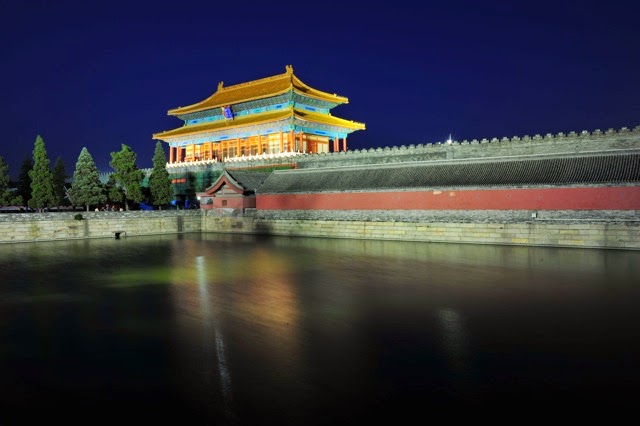 |
| North gate of the Forbidden City, Beijing |
Subscribe to:
Posts (Atom)